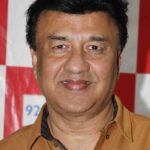
Udit Narayan Jha (born 1 December 1955), professionally known as Udit Narayan, is an Indian playback singer whose voice has been featured predominantly in Hindi cinema, alongside extensive recordings in Nepali, Tamil, Telugu, Kannada, Malayalam, Bengali, Odia, Bhojpuri, and Maithili films. Widely regarded as one of the defining playback voices of Indian cinema from the late 1980s through the 2000s, he is the only male singer in Filmfare Awards history to have won across three consecutive decades: the 1980s, 1990s, and 2000s.
Narayan made his Hindi playback debut in 1980 with Unees-Bees alongside Mohammed Rafi and achieved his major commercial breakthrough in 1988 with the song “Papa Kehte Hain” from Qayamat Se Qayamat Tak. Over a career spanning more than four decades, he has recorded tens of thousands of songs and received four National Film Awards and five Filmfare Awards. In recognition of his contributions to music, the Government of India honoured him with the Padma Shri in 2009 and the Padma Bhushan in 2016, while the King of Nepal conferred upon him the Order of Gorkha Dakshina Bahu in 2001.
Early Life and Education
Udit Narayan Jha was born on 1 December 1955 in Baisi, Supaul district, Bihar, India, into a Maithil Brahmin family. His father, Harekrishna Jha, was a farmer, and his mother, Bhuvaneshwari Devi, was a folk singer who encouraged his early interest in traditional and devotional music.
He completed his schooling at Shree Public Bindeshwari Secondary School in Rajbiraj, Nepal, and later pursued his intermediate studies at Ratna Rajya Laxmi Campus under Tribhuvan University in Kathmandu, Nepal. During his youth, he developed a strong foundation in Maithili and Nepali folk music before receiving formal classical training.
In 1978, Narayan received a music scholarship through a cultural-exchange programme that enabled him to relocate to Mumbai, India, to study Indian classical music at Bharatiya Vidya Bhavan. While studying in Mumbai, he regularly visited music directors’ studios and auditioned for playback opportunities.
Udit Narayan Biography, Age, Wife, Son, Songs, Career and Awards
| Bio | |
|---|---|
| Real Name | Udit Narayan Jha |
| Nickname | Udit and King of Melody |
| Profession | Singer |
| Physical Stats & More | |
| Height | in centimeters- 165 cm in meters- 1.65 m in Feet Inches- 5’ 5½” |
| Weight | in Kilograms- 70 kg in Pounds- 154.3 lbs |
| Body Measurements | – Chest: 37 Inches – Waist: 30 Inches – Biceps: 12 Inches |
| Eye Colour | Black |
| Hair Colour | Black |
| Personal Life | |
| Date of Birth | 1 December 1955 (Thursday) |
| Age (as of 2026) | 71 Years |
| Birth Place | Bhardaha, Saptari, Nepal |
| Zodiac sign | Sagittarius |
| Nationality | Indian |
| Hometown | Bhardaha, Saptari, Nepal |
| School | Shree public Bindeshawari Secondary School , Rajbiraj, Nepal Ratna Rajya Laxmi Campus, Kathmandu, Nepal |
| Debut | Unees Bees (1980) |
| Family | Father– Hare Krishna Jha (Farmer) Mother– Bhuwaneshwari Devi (Singer) Brothers– N/A Sisters– N/A |
| Religion | Hinduism |
| Address | Mumbai |
| Hobbies | Music practicing |
| Controversies | • In 2006, Ranjana Jha, from Bihar claimed that she is his first wife. Initially, he denied her statement, but later accepted her as his wife. • He attracted controversy in February 2025 when he kissed a female fan on her lips while she was taking a selfie with him during a concert. He received a lot of criticism for his actions. Later, he justified himself and said, “People want controversy to surround my family’s image. Fans can get so excited. We are not like that, we are decent people. Some fans express their affection this way. Why should we dwell on this?” • In February 2025, he attracted controversy after his first wife Ranjana Jha filed a complaint against him accusing him of not paying her maintenance and illegally possessing her property by not allowing her to enter it. During the court hearing at Supaul Family Court Udit accused Ranjana of harassing him to extort more money. As per reports, Udit had given her a farmland and a house worth Rs. 1 crore. He was also paying her Rs. 25,000 as maintenance. |
| Favourite Things | |
| Favourite Musician | Lata Mangeshkar, Alka Yagnik, A.R Rahman, Uttam Singh and Rajesh Roshan and Ismail Durbar |
| Girls, Affairs and More | |
| Marital Status | Married |
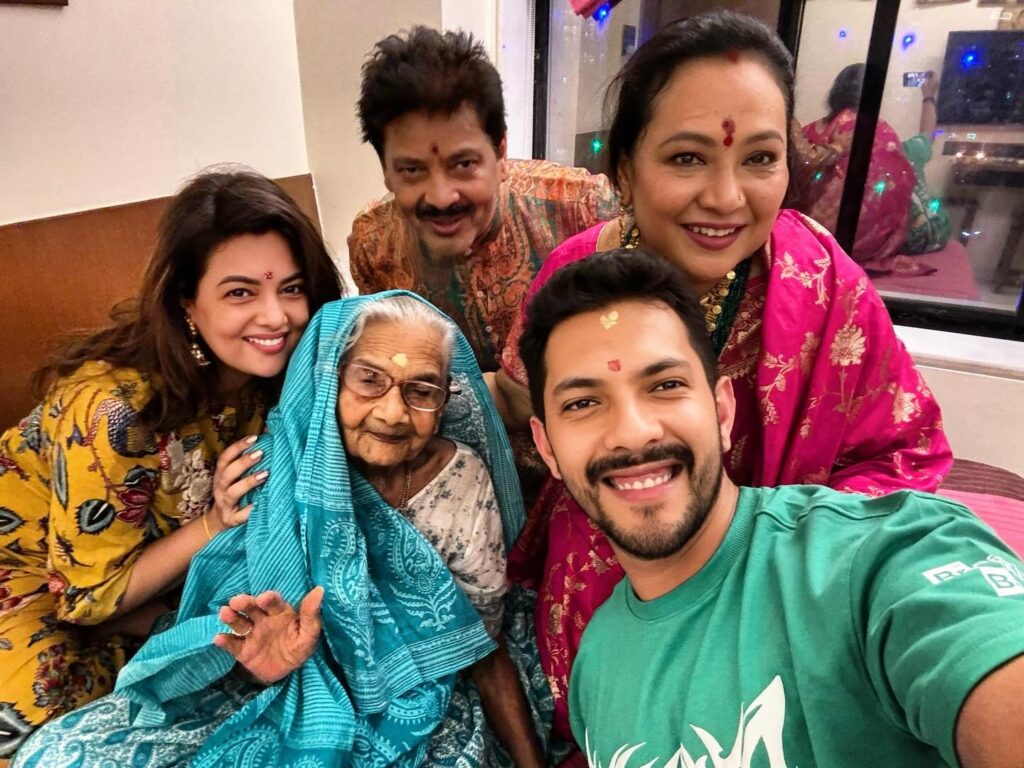
| Wife | • Ranjana Narayan Jha (1984-85) • Deepa Narayan Jha (Singer, 1985)  |
| Children | Daughter– None Son– Aditya Narayan (Singer and Actor) |
| Money Factor | |
| Net Worth | $20 million |
Career
Early Radio and Nepali Cinema Work (1970–1979)
Narayan began his professional singing career in 1970 as a staff artist for Radio Nepal, performing folk and modern songs in Maithili and Nepali. In 1973, he recorded his first film song, a comedic duet with Sushma Shrestha (later known as Poornima), for the Nepali film Sindoor. His early work in Nepal helped him build vocal versatility before moving to Mumbai.
Bollywood Debut and Struggle (1980–1987)
In 1980, music composer Rajesh Roshan offered Narayan his first Hindi film playback opportunity in Unees-Bees, where he sang a duet with his idol, Mohammed Rafi. During the early to mid-1980s, Narayan also recorded songs alongside legends such as Kishore Kumar, Lata Mangeshkar, and Suresh Wadkar.
Despite working steadily with composers like Bappi Lahiri and R. D. Burman, Narayan spent several years without a defining commercial hit in Hindi cinema. During this period, he also acted in and sang for Nepali films, notably playing the lead role in Tulsi Ghimire’s Kusume Rumal (1985) and Pirati (1985).
Commercial Breakthrough and Stardom (1988–1999)
Narayan’s career reached a major turning point in 1988 when composer duo Anand–Milind selected him to sing for newcomer Aamir Khan in Mansoor Khan’s Qayamat Se Qayamat Tak. His rendition of “Papa Kehte Hain” became a nationwide phenomenon and won him his first Filmfare Award for Best Male Playback Singer in 1989.
Read More: Javed Ali | Tulsi Kumar
Throughout the 1990s, Narayan emerged as one of the foremost romantic voices of Bollywood, frequently serving as the onscreen singing voice for leading actors including Shah Rukh Khan, Aamir Khan, Salman Khan, Akshay Kumar, and Ajay Devgn. He collaborated extensively with top music directors such as Nadeem–Shravan, Jatin–Lalit, Anu Malik, A. R. Rahman, and Uttam Singh.
His notable tracks from this decade include “Pehla Nasha” (Jo Jeeta Wohi Sikandar, 1992), “Jaadu Teri Nazar” (Darr, 1993), “Tu Cheez Badi Hai Mast Mast” (Mohra, 1994), “Mehndi Laga Ke Rakhna” (Dilwale Dulhania Le Jayenge, 1995), “Pardesi Pardesi” (Raja Hindustani, 1996), “Dil To Pagal Hai” (Dil To Pagal Hai, 1997), “Kuch Kuch Hota Hai” (Kuch Kuch Hota Hai, 1998), and “Chand Chhupa Badal Mein” (Hum Dil De Chuke Sanam, 1999).
National Awards, Regional Expansion, and Production (2000–2009)
In the 2000s, Narayan continued his dominance in mainstream Hindi soundtracks while expanding further into South Indian and Bhojpuri cinema. He delivered major hits such as “Kaho Naa Pyaar Hai” (2000), “Mitwa” (Lagaan, 2001), “Jaane Kyon” (Dil Chahta Hai, 2001), “Udja Kale Kawan” (Gadar: Ek Prem Katha, 2001), “Tere Naam” (2003), “Main Yahaan Hoon” (Veer-Zaara, 2004), and “Yeh Taara Woh Taara” (Swades, 2004).
His performances in Lagaan, Dil Chahta Hai, Zindagi Khoobsurat Hai, and Swades earned him three National Film Awards for Best Male Playback Singer between 2001 and 2004. In 2004, he released his non-film Nepali album Upahaar, featuring duets with his wife, Deepa Narayan Jha. In 2005, he ventured into film production with the Bhojpuri film Kab Hoi Gawna Hamar, which won the National Film Award for Best Feature Film in Bhojpuri.
Later Work, Television, and Live Concerts (2010–Present)
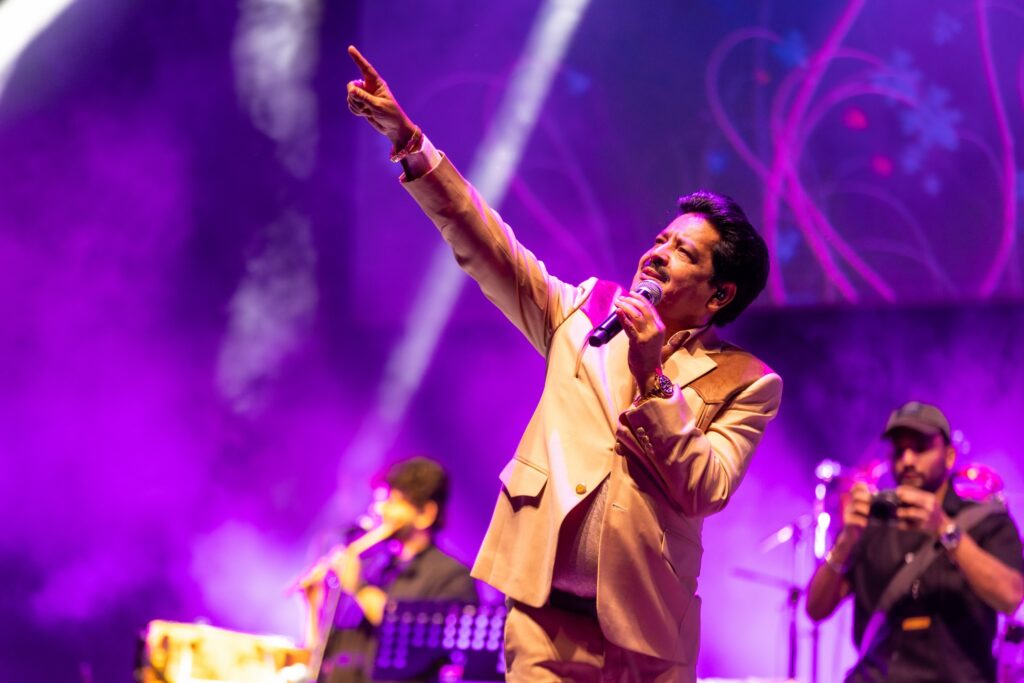
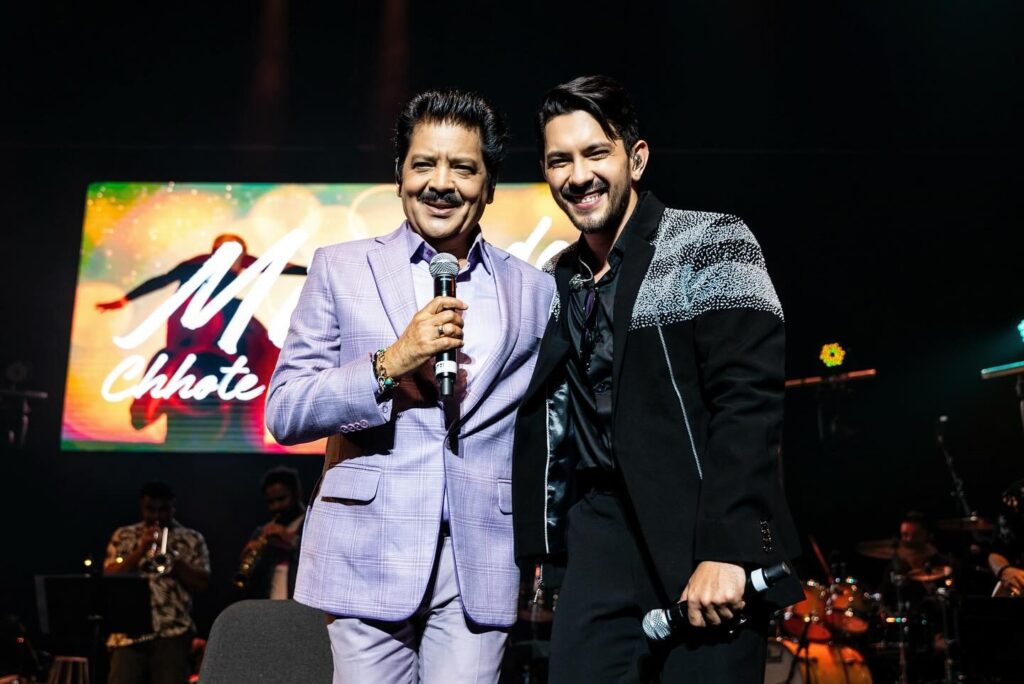
During the 2010s and 2020s, Narayan selectively recorded film tracks while performing in international concert tours alongside his son, Aditya Narayan. Notable later songs include “Radha” from Student of the Year (2012), “Jugraafiya” from Super 30 (2019), and “Main Nikla Gaddi Leke” (recreated version) from Gadar 2 (2023).
He has also appeared as a judge and special guest on Indian television singing reality shows, including Indian Idol, Sa Re Ga Ma Pa, and Jo Jeeta Wohi Super Star, and served as a jury member for the Global Indian Music Academy Awards in 2012.
Discography
Selected Hindi Film Songs
| Year | Song | Film | Composer(s) |
|---|---|---|---|
| 1980 | “Mil Gaya Mil Gaya” | Unees-Bees | Rajesh Roshan |
| 1988 | “Papa Kehte Hain” | Qayamat Se Qayamat Tak | Anand–Milind |
| 1992 | “Pehla Nasha” | Jo Jeeta Wohi Sikandar | Jatin–Lalit |
| 1993 | “Jaadu Teri Nazar” | Darr | Shiv–Hari |
| 1994 | “Tu Cheez Badi Hai Mast Mast” | Mohra | Viju Shah |
| 1995 | “Mehndi Laga Ke Rakhna” | Dilwale Dulhania Le Jayenge | Jatin–Lalit |
| 1996 | “Pardesi Pardesi” | Raja Hindustani | Nadeem–Shravan |
| 1997 | “Dil To Pagal Hai” | Dil To Pagal Hai | Uttam Singh |
| 1998 | “Kuch Kuch Hota Hai” | Kuch Kuch Hota Hai | Jatin–Lalit |
| 1999 | “Chand Chhupa Badal Mein” | Hum Dil De Chuke Sanam | Ismail Darbar |
| 1999 | “Taal Se Taal Mila” | Taal | A. R. Rahman |
| 2000 | “Kaho Naa Pyaar Hai” | Kaho Naa… Pyaar Hai | Rajesh Roshan |
| 2001 | “Mitwa” | Lagaan | A. R. Rahman |
| 2001 | “Udja Kale Kawan” | Gadar: Ek Prem Katha | Uttam Singh |
| 2003 | “Tere Naam” | Tere Naam | Himesh Reshammiya |
| 2004 | “Main Yahaan Hoon” | Veer-Zaara | Madan Mohan |
| 2004 | “Yeh Taara Woh Taara” | Swades | A. R. Rahman |
| 2012 | “Radha” | Student of the Year | Vishal–Shekhar |
| 2019 | “Jugraafiya” | Super 30 | Ajay–Atul |
Selected Non-Hindi and Acting Credits
| Year | Title | Language | Role / Contribution |
|---|---|---|---|
| 1973 | Sindoor | Nepali | Playback singer |
| 1985 | Kusume Rumal | Nepali | Lead actor and playback singer |
| 1985 | Pirati | Nepali | Actor and playback singer |
| 2004 | Upahaar | Nepali | Studio album (with Deepa Narayan Jha) |
| 2005 | Kab Hoi Gawna Hamar | Bhojpuri | Film producer |
| 2008 | Sivaji: The Boss (“Sahana”) | Tamil | Playback singer |
| 2010 | Madrasapattinam (“Vaama Duraiyamma”) | Tamil | Playback singer |
Awards and Honours
Civilian and State Honours
- Order of Gorkha Dakshina Bahu (Fourth Class) (2001): Awarded by King Birendra Bir Bikram Shah Dev of Nepal for contributions to Nepali music.
- Padma Shri (2009): Awarded by the Government of India for distinguished service in the field of arts and music.
- Padma Bhushan (2016): Awarded by the Government of India as the country’s third-highest civilian honour.
National Film Awards
- 2001: Best Male Playback Singer for “Mitwa” (Lagaan) and “Jaane Kyon” (Dil Chahta Hai).
- 2002: Best Male Playback Singer for “Chhote Chhote Sapne” (Zindagi Khoobsurat Hai).
- 2004: Best Male Playback Singer for “Yeh Taara Woh Taara” (Swades).
- 2005: Best Feature Film in Bhojpuri (as producer) for Kab Hoi Gawna Hamar.
Filmfare Awards
- 1989: Best Male Playback Singer for “Papa Kehte Hain” (Qayamat Se Qayamat Tak).
- 1996: Best Male Playback Singer for “Mehndi Laga Ke Rakhna” (Dilwale Dulhania Le Jayenge).
- 1997: Best Male Playback Singer for “Pardesi Pardesi” (Raja Hindustani).
- 2000: Best Male Playback Singer for “Chand Chhupa Badal Mein” (Hum Dil De Chuke Sanam).
- 2002: Best Male Playback Singer for “Mitwa” (Lagaan).
Other Major Awards
- Star Screen Awards (1997): Best Male Playback Singer for “Aaye Ho Meri Zindagi Mein” (Raja Hindustani).
- IIFA Awards (2000): Best Male Playback Singer for “Chand Chhupa Badal Mein” (Hum Dil De Chuke Sanam).
- Zee Cine Awards (2000): Best Playback Singer – Male for “Chand Chhupa Badal Mein” (Hum Dil De Chuke Sanam).
- Star Screen Awards (2003): Best Male Playback Singer for “Woh Chand Jaisi Ladki” (Devdas).
- Zee Cine Awards (2013): Best Track of the Year for “Radha” (Student of the Year).
Personal Life
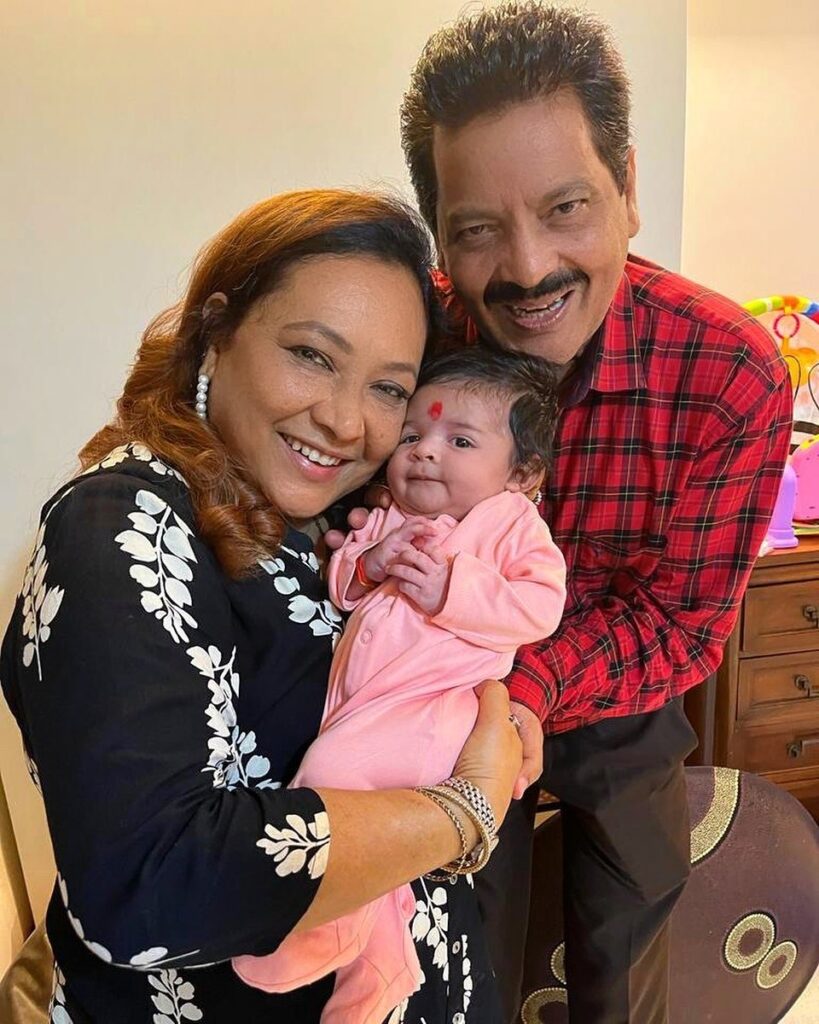
Udit Narayan married Ranjana Narayan Jha in 1984. In 1985, he married Nepali singer Deepa Gahatraj (Deepa Narayan Jha). In 2006, following public legal proceedings regarding his first marriage, Narayan formally acknowledged Ranjana Jha as his first wife and agreed to provide for her maintenance.
With his wife Deepa Narayan Jha, he has one son, Aditya Narayan (born 6 August 1987), who is a playback singer, actor, and television host. Aditya Narayan married actress Shweta Agarwal in December 2020, and the couple welcomed a daughter, Tvisha, in 2022.
Musical Style and Legacy
Udit Narayan is recognized for his clear, expressive tenor voice and effortless transition between romantic ballads, folk-infused numbers, and upbeat dance tracks. Music critics and composers have often highlighted his natural diction and ability to adapt his vocal timbre to match the onscreen personalities of diverse actors across generations.
Alongside contemporaries Kumar Sanu and Sonu Nigam, Narayan defined the soundscape of 1990s and early 2000s Bollywood music. His cross-border cultural appeal in both India and Nepal, combined with recordings in dozens of Indian languages, has cemented his status as an enduring figure in South Asian playback singing.
Related Posts
 Alka Yagnik Biography, Age, Husband, Daughter, Songs, Awards and More
Alka Yagnik (born 20 March 1966) is an Indian playback singer who works predominantly in…
- Anu Malik Biography, Age, Wife, Daughters, Songs, Career and Awards
Anwar "Anu" Malik (born 2 November 1960) is an Indian music composer, playback singer, music…
- Khushalii Kumar Biography, Age, Family, Movies, Career and Awards
Khushalii Kumar (born Khushali Kumar Dua) is an Indian film actress and fashion designer who…
- Tulsi Kumar Biography, Age, Husband, Family, Songs, Career and Awards
Tulsi Kumar Dua, professionally known as Tulsi Kumar, is an Indian playback singer, radio jockey,…
- Amaal Mallik Biography, Age, Family, Songs, Career, Awards and More
Amaal Mallik (born 16 June) is an Indian music composer, music director, singer and music…
- Asim Azhar Biography, Age, Songs, Albums, Career and Personal Life
Asim Azhar (Urdu: عاصم اظہر; born 29 October 1996) is a Pakistani singer, songwriter, musician…
- Hadiqa Kiani Biography, Age, Husband, Songs, Albums, Career and Awards
Hadiqa Kiani (Urdu: حدیقہ کیانی) is a Pakistani singer, songwriter, musician and actress. She is…
- Anupam Roy Biography, Age, Wife, Songs, Albums, Career and Awards
Anupam Roy (Bengali: অনুপম রায়; born 29 March 1982) is an Indian singer-songwriter, music director,…